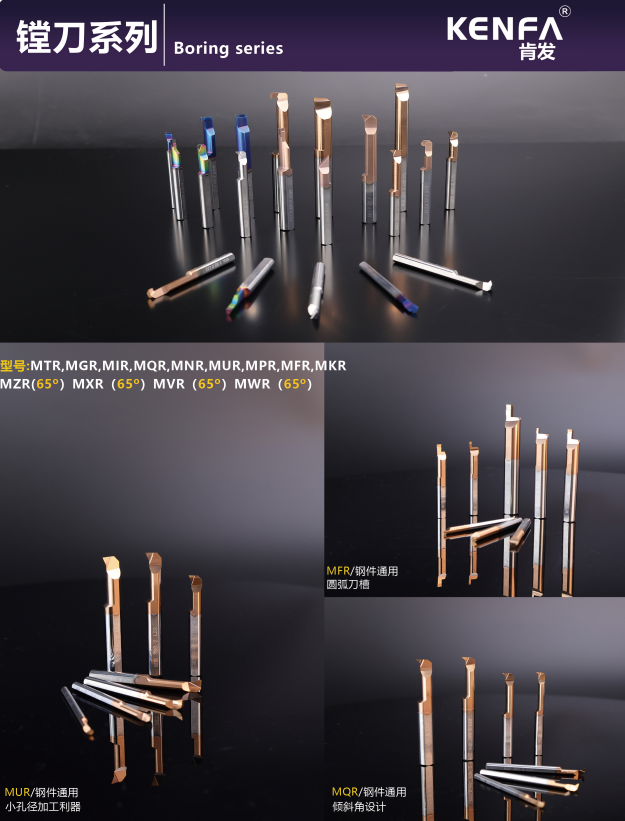
Select a small-hole boring tool by defining the finished bore, starting hole, depth, tolerance, surface requirement, material, machine interface and available shank or sleeve size. Use the KENFA family images to identify a catalog route, then confirm the exact bar, insert, sleeve, reach and dimensions from model-level data before requesting price, availability or cutting conditions.
What is the correct selection order?
| Step | Question | Required information |
|---|---|---|
| 1 | Can the tool enter and reach the feature? | Starting bore, finished bore, depth, shoulder, entry and clearance |
| 2 | What must the finished hole meet? | Tolerance, surface requirement, profile and inspection method |
| 3 | Which operation is required? | Boring, profiling, grooving or internal threading |
| 4 | Which machine-side interface is available? | Machine, holder, sleeve, shank size, orientation and overhang |
| 5 | Which model-level fields remain? | Bar, insert, dimensions, grade, coating and compatibility evidence |
How should KENFA catalog families be used?
| Visual family reference | Useful starting question | Do not assume |
|---|---|---|
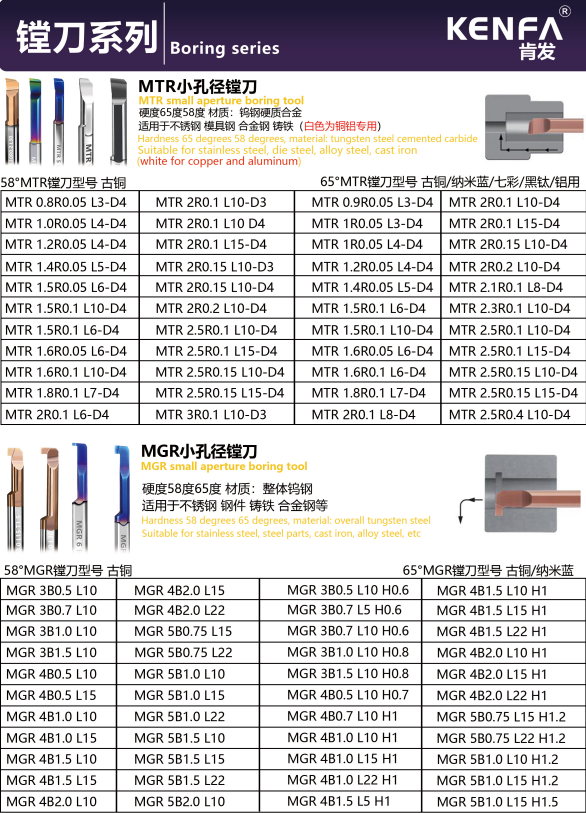
| MTR/MGR model-table image | Does the current label or operation point to this small-aperture family? | Exact dimensions, insert, coating or holder fit |
| Other M-series boring tables | Is the operation boring, profiling, grooving or internal threading? | Interchangeability between similar series names |
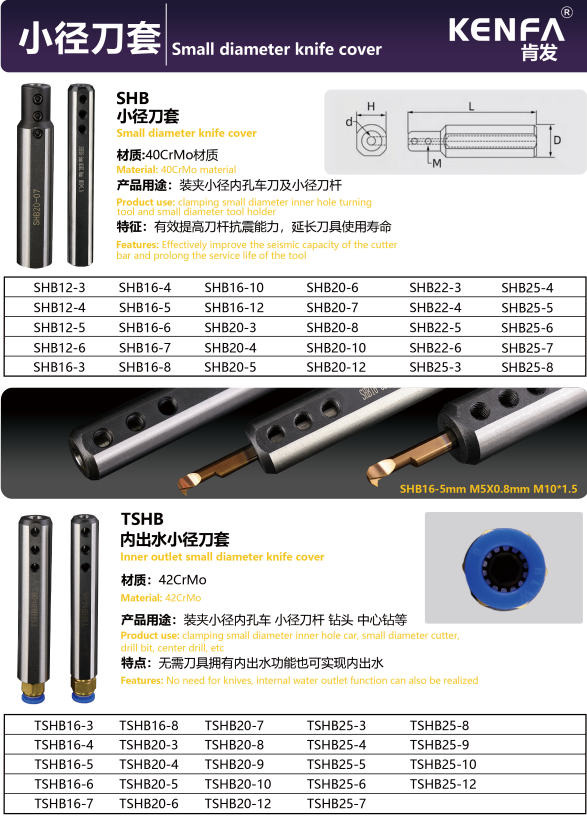
| SHB/TSHB sleeve table | Does the machine-side clamping require a sleeve route? | Sleeve fit from a visible outline or series name alone |
Which images should accompany the RFQ?
What information should be attached?
- A section drawing with starting bore, finished bore, depth, shoulders and tolerances.
- Photos of the current bar, insert, sleeve, holder and machine-side clamping.
- Complete codes from labels or packaging, including every suffix.
- Workpiece material and hardness, operation, current problem and quantity.
- Current conditions and coolant method as context for review, not as a requested universal recommendation.
Which related pages should buyers review?
Use the Small-Hole Boring and Internal Machining application page, then compare Boring Tools, Boring Sleeves and Cylindrical Tool Holders. Submit the result through the boring-tools RFQ path or request a model reference from Catalogs & Technical Resources.
Buyer Questions
What is the minimum bore information needed?
Send the starting and finished diameters, depth, tolerance, shoulders and available entry clearance.
Can a longer bar solve every deep-bore request?
No. Reach must be reviewed with shank size, overhang, rigidity, clearance and the actual feature.
Can a sleeve be chosen from outer diameter alone?
No. Machine-side interface, inner clamping, length, orientation and exact bar or holder dimensions are also required.
When should buyers send the current assembly?
Send it whenever a replacement or compatibility match is needed; complete codes and setup photos reduce ambiguity.
Source Notes
KENFA catalog images CI-26, CI-28 and CI-58 identify boring and sleeve family routes but do not replace model-level dimensions. General reach, clearance and rigidity checks were cross-checked against Sandvik Coromant internal turning guidance. Last reviewed July 12, 2026.