KENFA Product Family
Forming Taps And Dies
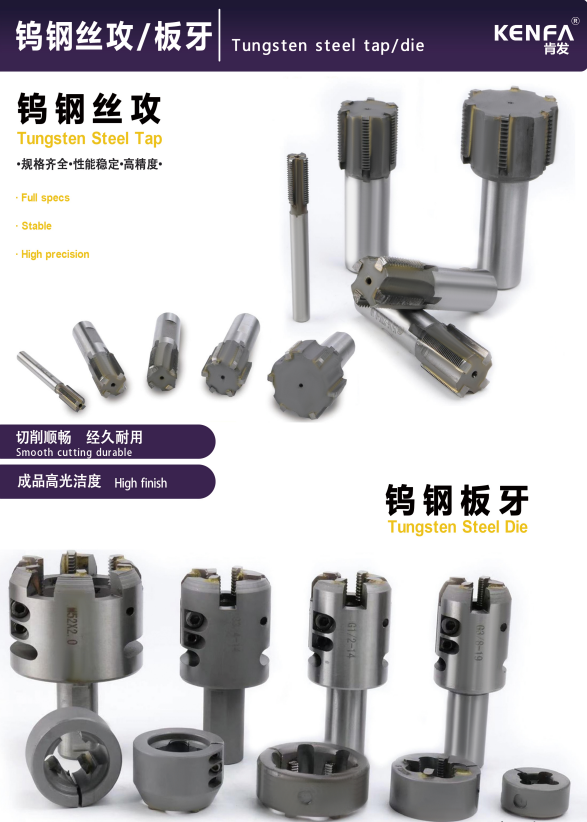
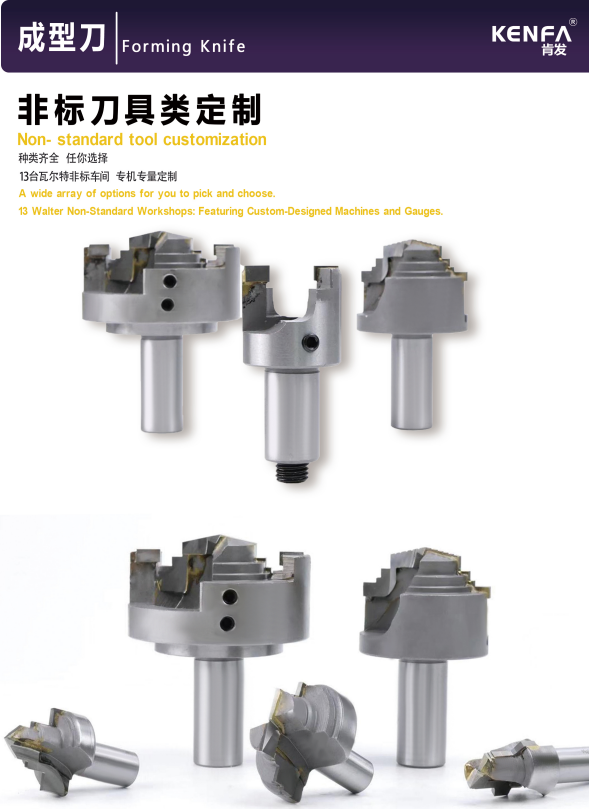
KENFA Forming Taps And Dies group the catalog routes for forming tools, tungsten-steel taps, dies and non-standard threading inquiries. Buyers should provide the thread standard, size and pitch, workpiece material, blind or through-hole condition, machine type, required dimensions and quantity. Custom profiles or forming tools should include a drawing for feasibility and model review before quotation.
What should buyers confirm?
Use these fields to narrow the catalog route before KENFA reviews the final model and quotation.
- Thread standard, size and pitch
- Workpiece material
- Blind or through-hole condition
- Machine type
- Drawing and quantity
How should buyers narrow this family?
Use the starting point that matches the information already available, then confirm the missing fields before model matching.
| Starting point | Confirm | Why it matters |
|---|---|---|
| Produce an internal thread | Thread standard, size and pitch, blind or through hole, thread depth, workpiece and machine | Thread geometry and hole condition narrow the tap route before exact construction is reviewed. |
| Produce an external thread | Thread standard, size, pitch, stock diameter, threaded length, hand, workpiece and equipment | The external feature and operating method are needed to review the appropriate die route. |
| Request a custom forming profile | Dimensioned drawing, tolerances, workpiece, machine interface, quantity and inspection method | Non-standard profiles require controlled geometry before feasibility and model matching can begin. |
Which matching errors should buyers avoid?
These checks keep a family-level inquiry from becoming an unsupported model or compatibility claim.
- Distinguish cutting and forming tap requirements and state whether the hole is blind or through.
- Do not infer dimensions, tool material or coating from appearance; bind them to the exact reviewed reference.
- Confirm machine, holder, operating direction, workpiece and thread condition before discussing the final tool route.
Buyer questions
What is the minimum information for a tap or die RFQ?
Provide the thread standard, size, pitch, material, hole or stock condition, machine, current tool reference, quantity and drawing.
Why does a blind hole require separate review?
Thread depth, available relief, chip or forming conditions and entry geometry differ from a through-hole application.
How should a custom forming-tool request be prepared?
Send a dimensioned profile, tolerances, material, machine interface, quantity, inspection method and current sample or photos when available.
Related buyer resources
Continue from family selection to the most relevant application, guide or catalog-request path.
Request CNC cutting tool support
Send your model, workpiece material, operation and quantity so KENFA can review the tooling requirement.
Request a Quote