For small-hole boring and internal machining, define the starting bore, finished diameter, depth, tolerance, workpiece material, machine interface and current holder before choosing a tool family. KENFA can review boring bars, sleeves and cylindrical holders from that information, while the selected model and setup must provide the exact insert, dimensions, coating and cutting conditions.
What should buyers define before selecting a small-hole boring route?
| Buyer input | What to send | Why it matters |
|---|---|---|
| Hole geometry | Starting bore, finished diameter, depth, shoulder, entry and interrupted features | The tool must enter the bore, reach the feature and retain clearance. |
| Quality target | Tolerance, surface requirement and inspection method | A diameter-only request does not describe the finished-hole requirement. |
| Workpiece | Material grade and hardness when known | KENFA needs material context before insert, coating or cutting-condition review. |
| Machine-side interface | Machine type, turret or holder, current sleeve and available shank size | Clamping and available space can rule out an otherwise relevant family. |
| Current problem | Chatter, rubbing, chip packing, poor finish, size drift or edge damage | The observed failure helps separate geometry, reach, rigidity and process questions. |
Which KENFA product families are relevant?
- Boring Tools for the main small-aperture boring family route.
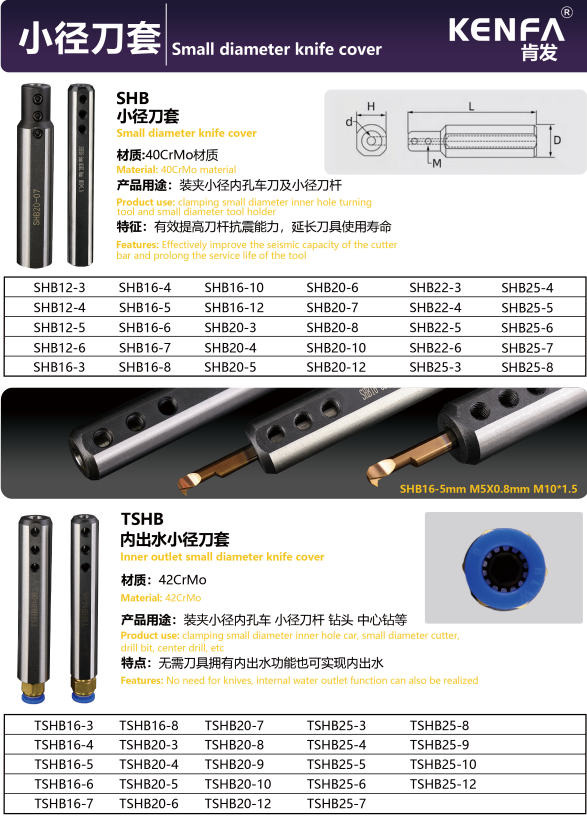
- Boring Sleeves when clamping or sleeve dimensions are part of the request.
- Cylindrical Tool Holders when buyers must check the holder interface and orientation.
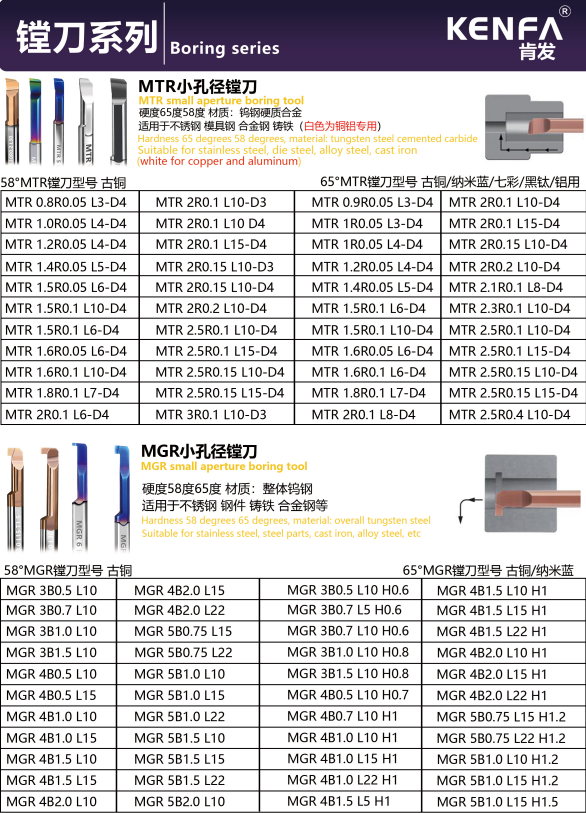
Which catalog images help identify the route?
Use these images to identify a family or current model reference. Do not read an unlisted dimension, fit or coating from the image alone.
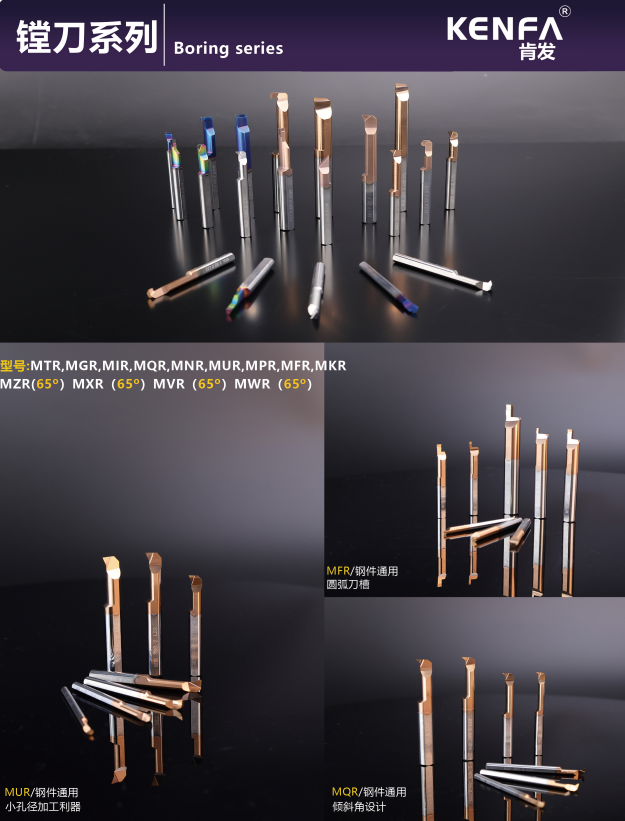
How should buyers describe common boring problems?
| Observed issue | Checks to include | Evidence to attach |
|---|---|---|
| Chatter or poor finish | Overhang, bore depth, shank size, clamping, machine rigidity and current conditions | Surface photo, setup photo and current model code |
| Chip packing | Hole depth, blind or through condition, coolant access and chip form | Hole drawing and chip photo |
| Rubbing or poor access | Starting bore, profile, shoulder, relief and tool orientation | Section drawing with controlled dimensions |
| Compatibility uncertainty | Bar, insert, sleeve and machine-side codes | Clear photos of labels, seat and clamping |
What should buyers send through RFQ?
Send the complete dimensions and current setup through the boring-tools RFQ path. The small-hole boring selection guide provides a step-by-step checklist, and Catalogs & Technical Resources explains how to request the relevant model reference.
Buyer Questions
Can buyers select a tool from finished diameter alone?
No. Buyers also need the starting bore, depth, profile, tolerance, shank or sleeve space and machine setup.
Why should buyers include the current boring bar code?
It provides the strongest starting point for checking bar, insert, sleeve and machine-side compatibility.
Can the model-table image confirm every dimension?
No. It can route the inquiry, but buyers must confirm the exact model row and controlled dimensional data before ordering.
Should buyers copy cutting conditions from another machine?
No. Buyers must review material, machine, rigidity, reach, coolant and the selected model together.
Source Notes
KENFA catalog images CI-26, CI-28 and CI-58 support family routing only. General internal-turning checks were cross-checked against Sandvik Coromant internal turning guidance. Final KENFA model selection remains subject to exact catalog and RFQ review. Last reviewed July 12, 2026.