Select a diamond or PCD tooling route by defining the exact workpiece material, operation, feature geometry, machine interface, current tool, required finish or tolerance and wear problem. KENFA overview images can distinguish PCD cutter, milling-insert and diamond-hob inquiry paths, but edge construction, suitability, tool life and achievable finish remain subject to model and application review.
What decision does this guide support?
This guide uses the workpiece, operation and tool interface to route an inquiry while keeping material suitability and performance claims outside family-level catalog evidence.
What should buyers compare?
| Starting point | Information to confirm | Why it matters |
|---|---|---|
| Review a PCD cutter or insert route | Exact material, operation, current tool, feature drawing, finish target and machine interface | Connects the cutting element to the real workpiece and operation. |
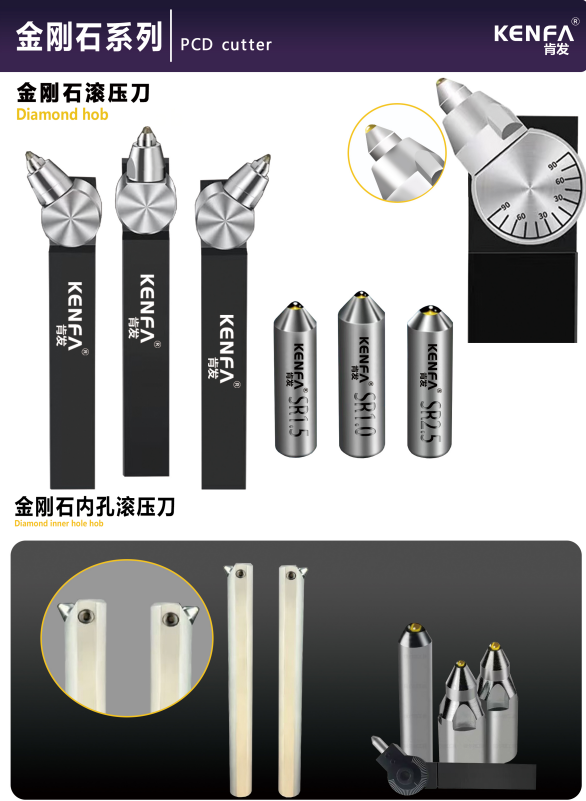
| Replace a diamond hob or internal tool | Current code or drawing, body, edge layout, wear location, quantity and service need | Controls replacement geometry rather than relying on appearance. |
| Request a custom profile | Dimensioned feature, tolerance, reach, clamping, material and inspection method | Provides the evidence needed for a custom-tool review. |
What information should buyers send?
- Exact workpiece alloy, composite or material designation.
- Operation, feature drawing, tolerance and finish target.
- Machine, holder, body and clamping interface.
- Current tool code, sample and wear-location photos.
- Quantity, destination and any service or inspection requirement.
How should the KENFA catalog images be used?
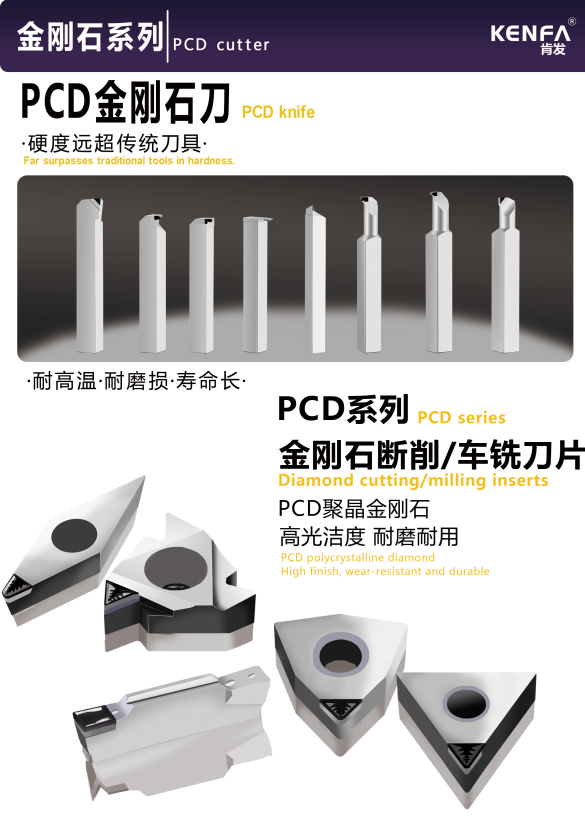
The following production Media Library images identify the relevant KENFA family and visible catalog route. They do not prove an exact model, dimension, interface, material, performance, stock or delivery condition.
Which claims remain subject to model review?
- Do not infer edge material or construction from the family image.
- Do not claim suitability for a material without exact application review.
- Do not promise tool life, finish or tolerance outcomes.
- Do not infer geometry, bore, profile or delivery from overview art.
Which KENFA pages should be reviewed next?
- Diamond and PCD Tools
- Milling Cutter Series
- Cutting Tool RFQ Preparation Checklist
- How to Prepare a Cutting Tool Compatibility RFQ
How should buyers submit the request?
Use the KENFA RFQ form for Diamond and PCD Tools. Attach only the drawings and photos needed for technical review, copy current model markings exactly and separate required facts from preferred targets. Price, availability and delivery are confirmed only through the final quotation.
Buyer Questions
Which material details should be included?
Provide the exact alloy or composite designation, filler or abrasive content where relevant, operation and required surface result.
Can a worn tool sample support the RFQ?
Yes, but a drawing and interface dimensions are still needed to control the replacement geometry.
Are tool-life values available from the overview?
No. Tool life depends on the selected tool, material, machine, parameters and acceptance method.
How should a custom internal tool be described?
Send the dimensioned feature, tolerance, reach, clamping interface, workpiece and inspection method.
Source Notes
KENFA catalog assets CI-70 and CI-71; CAT-005 permits family routing but blocks edge construction, material suitability and performance conclusions. This guide uses the current KENFA family-depth and RFQ evidence boundaries. Last reviewed July 15, 2026.