To specify a shank or cutter-head assembly, record the machine-side interface, arbor or shank connection, cutter body and insert codes, target diameter, reach, operation, material and available clearance. KENFA can review the closest holder family from those inputs; catalog overview labels such as ER, FMB, SLN, GSK or MTA do not by themselves confirm an interchangeable assembly.
What decision does this guide support?
This guide treats the machine interface, intermediate holder or arbor, cutter body and insert as a compatibility chain instead of treating one visible family label as a complete assembly specification.
What should buyers compare?
| Starting point | Information to confirm | Why it matters |
|---|---|---|
| Build a modular cutter assembly | Machine interface, cutter body diameter, arbor or connection, insert family and operation | The machine-side and cutter-side interfaces must agree. |
| Replace a body, head or shank | Complete body, insert and arbor codes, measured interfaces and assembly photos | Reduces the risk of matching a similar-looking but incompatible connection. |
| Change reach or clearance | Part drawing, required reach, overhang, machine envelope and expected cutter diameter | Connects access needs to rigidity and assembly size constraints. |
What information should buyers send?
- Machine, spindle, turret or holder interface designation.
- Complete cutter body, insert, arbor and shank codes.
- Measured connection, diameter, reach and clearance dimensions.
- Operation, workpiece material and direction of cut.
- Assembly photos, drawing, quantity and destination.
How should the KENFA catalog images be used?
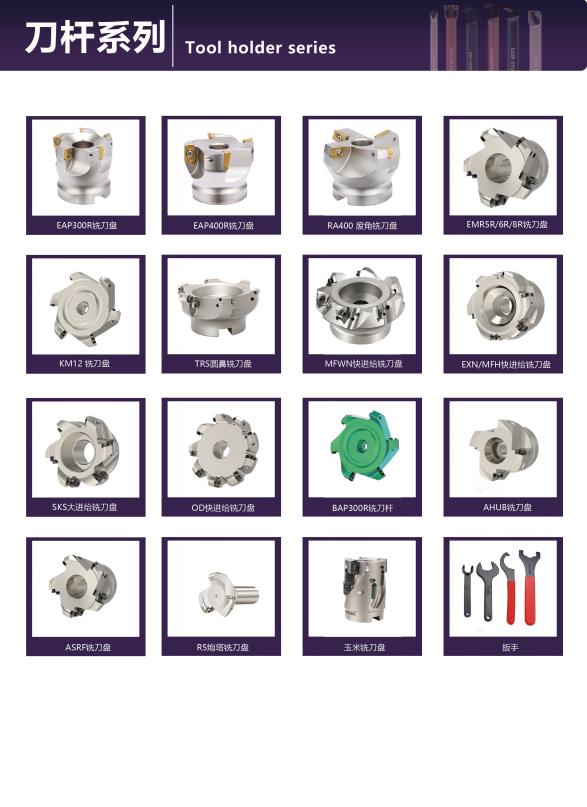
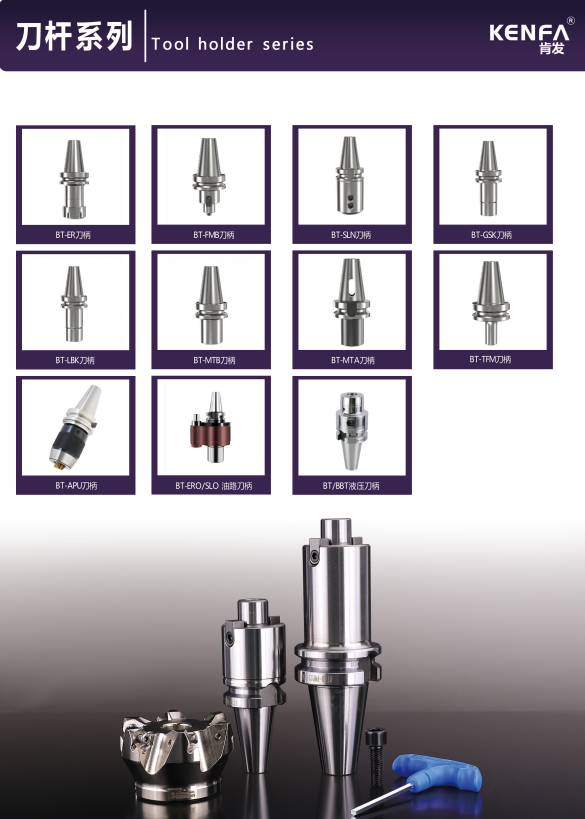
The following production Media Library images identify the relevant KENFA family and visible catalog route. They do not prove an exact model, dimension, interface, material, performance, stock or delivery condition.
Which claims remain subject to model review?
- ER, FMB, SLN, GSK and MTA remain visible route labels only.
- Do not infer taper, connection or interchangeability from a catalog photo.
- Do not claim a cutter-body and insert fit without exact references.
- Do not promise performance, stock or delivery from family-level evidence.
Which KENFA pages should be reviewed next?
- Shanks and Cutter Heads
- Indexable Milling Cutters
- Boring Sleeves
- Cutting Tool RFQ Preparation Checklist
- How to Prepare a Cutting Tool Compatibility RFQ
How should buyers submit the request?
Use the KENFA RFQ form for Shanks and Cutter Heads. Attach only the drawings and photos needed for technical review, copy current model markings exactly and separate required facts from preferred targets. Price, availability and delivery are confirmed only through the final quotation.
Buyer Questions
What is the minimum information for an assembly inquiry?
Provide the machine interface, operation, cutter diameter, body and insert references, reach, material and an assembly photo or drawing.
Can an interface be confirmed from a photo?
A photo helps route the request, but the exact code and measured connection dimensions are still required.
When is a part drawing necessary?
Include it whenever reach, collision clearance, shoulder access, feature depth or a non-standard connection affects the assembly.
Should machine limits be included?
Yes. State speed, power, rigidity and clearance limits when they constrain the requested diameter, reach or operation.
Source Notes
KENFA catalog assets CI-55 and CI-56; CAT-005 limits them to family routing and blocks inferred taper, fit and performance claims. This guide uses the current KENFA family-depth and RFQ evidence boundaries. Last reviewed July 15, 2026.