Select a grooving tool holder by documenting whether the cut is external or internal, groove or parting geometry, holder hand, shank size, reach, turret clearance, current holder and insert or blade codes. KENFA catalog images can route the request to a holder family, but exact seat, clamp, compatibility and cutting conditions require model-level review.
What decision does this guide support?
This guide separates feature geometry, machine-side fit and cutting-tool compatibility so a buyer does not select a holder from groove width or appearance alone.
What should buyers compare?
| Starting point | Information to confirm | Why it matters |
|---|---|---|
| Replace a current holder | Complete holder and insert or blade codes, hand, shank dimensions and setup photos | Preserves the strongest available seat, clamp and orientation reference. |
| Plan a groove or parting setup | External or internal use, width, depth, cut diameter, direction, material and clearance | Defines the feature and machine envelope before a holder route is reviewed. |
| Investigate chatter or breakage | Overhang, clamping, coolant, current parameters and edge, chip and holder photos | Separates setup evidence from insert and process questions without assigning a cause. |
What information should buyers send?
- Complete current holder and insert or blade codes.
- Measured shank, reach and available turret clearance.
- External or internal direction, holder hand and cutting direction.
- Groove or parting drawing with width, depth and location.
- Workpiece material, quantity, destination and current problem.
How should the KENFA catalog images be used?
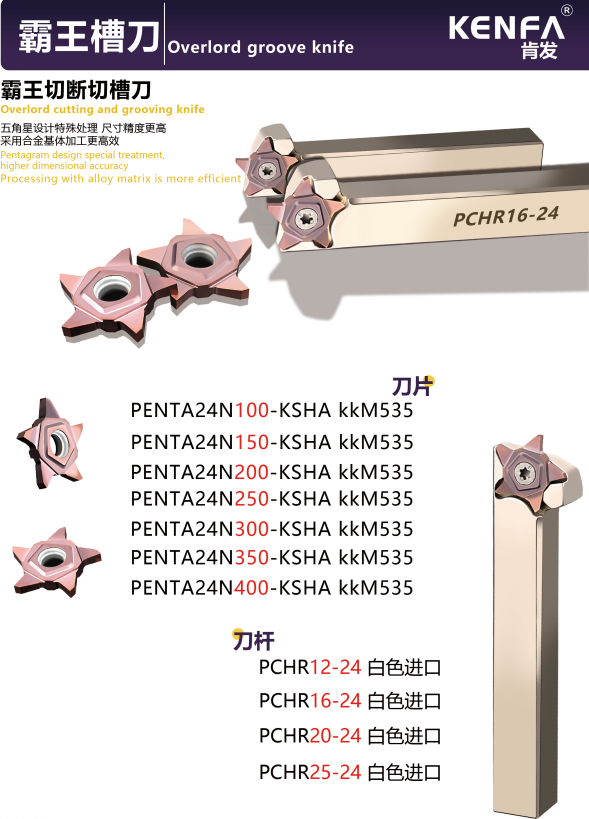
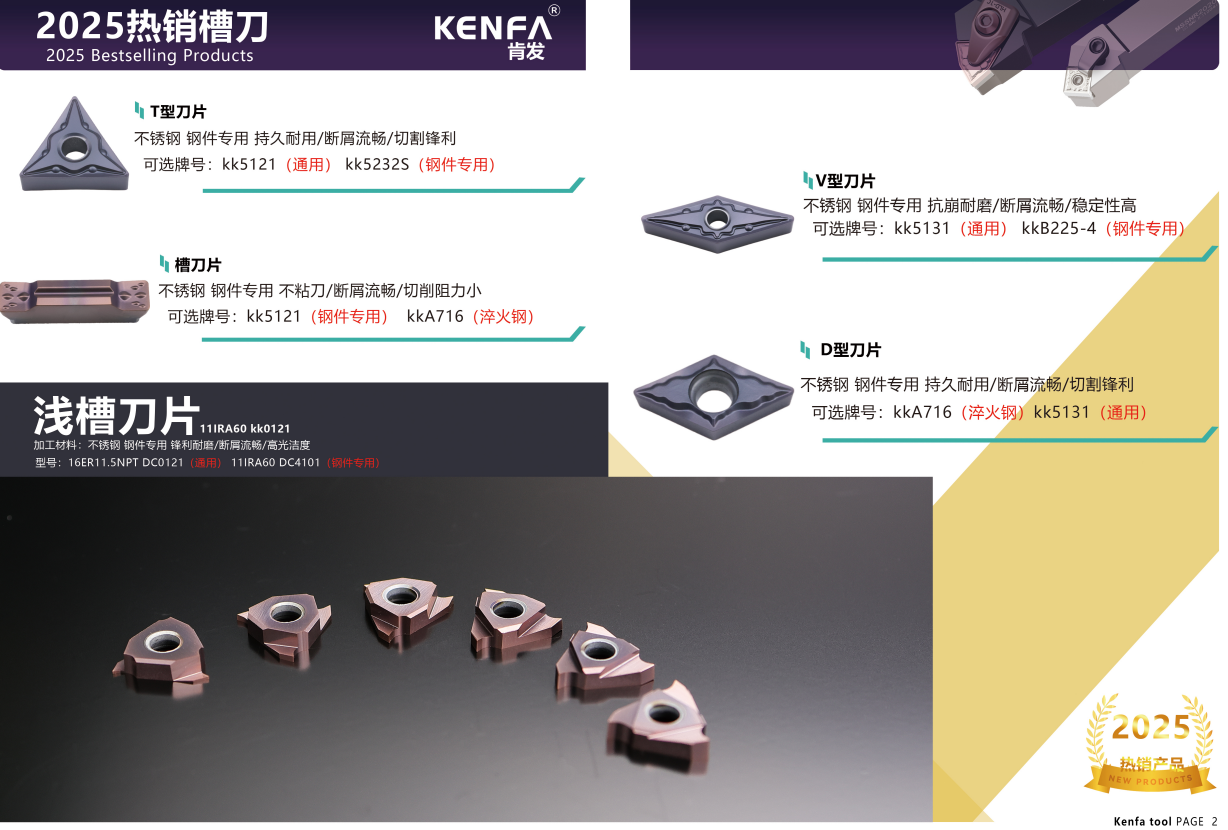
The following production Media Library images identify the relevant KENFA family and visible catalog route. They do not prove an exact model, dimension, interface, material, performance, stock or delivery condition.
Which claims remain subject to model review?
- Do not infer a seat or clamp interface from an overview image.
- Do not convert campaign wording into sales-volume or market-rank claims.
- Do not publish cutting conditions without an exact reviewed model and setup.
- Do not promise compatibility, stock or delivery before quotation.
Which KENFA pages should be reviewed next?
- Grooving Tool Holders
- Grooving and Parting Stability
- Grooving Inserts and Blades
- Cutting Tool RFQ Preparation Checklist
- How to Prepare a Cutting Tool Compatibility RFQ
How should buyers submit the request?
Use the KENFA RFQ form for Grooving Tool Holders. Attach only the drawings and photos needed for technical review, copy current model markings exactly and separate required facts from preferred targets. Price, availability and delivery are confirmed only through the final quotation.
Buyer Questions
Can a holder be selected from groove width alone?
No. The seat, clamp, hand, direction, shank, reach, blade or insert family and machine clearance must also be reviewed.
What should be sent for a replacement?
Send complete holder and cutting-tool codes, measured shank, assembly photos and the installed machine orientation.
How should a reach problem be described?
Attach the part drawing, groove location, obstruction or turret dimensions, current overhang and setup photos.
Can price be confirmed before the holder fit?
The final quotation depends on the selected reference, quantity and destination after the technical route is reviewed.
Source Notes
KENFA catalog assets CI-22 and HS-02; CAT-005 classifies both as existing family or series support rather than source-complete new-series evidence. This guide uses the current KENFA family-depth and RFQ evidence boundaries. Last reviewed July 15, 2026.