Specify a thread plug or ring gauge by identifying internal or external inspection, thread standard, nominal size, pitch, tolerance class, GO or NO-GO function, quantity and required marking or documentation. KENFA catalog images support family routing only; accuracy class, calibration, traceability, availability and acceptance documents must be confirmed for the exact quoted gauge.
What decision does this guide support?
This guide keeps inspection function, thread definition and documentation requirements separate so a gauge is not selected from nominal size or promotional wording alone.
What should buyers compare?
| Starting point | Information to confirm | Why it matters |
|---|---|---|
| Replace an existing gauge | Full marking, standard, size, pitch, tolerance class, plug or ring and GO or NO-GO use | The complete marking is the strongest replacement reference. |
| Set up a new inspection | Internal or external thread, standard, size, pitch, class, purpose and quantity | Defines the controlled thread and acceptance route. |
| Request markings or documents | Drawing, acceptance reference, marking format and required calibration or inspection documents | Makes non-standard deliverables explicit before quotation. |
What information should buyers send?
- Internal or external thread and plug or ring gauge type.
- Exact thread standard, nominal size, pitch and tolerance class.
- GO, NO-GO or paired inspection requirement.
- Required marking, calibration, inspection or traceability documents.
- Quantity, destination and clear photos of existing markings when replacing.
How should the KENFA catalog images be used?
The following production Media Library images identify the relevant KENFA family and visible catalog route. They do not prove an exact model, dimension, interface, material, performance, stock or delivery condition.
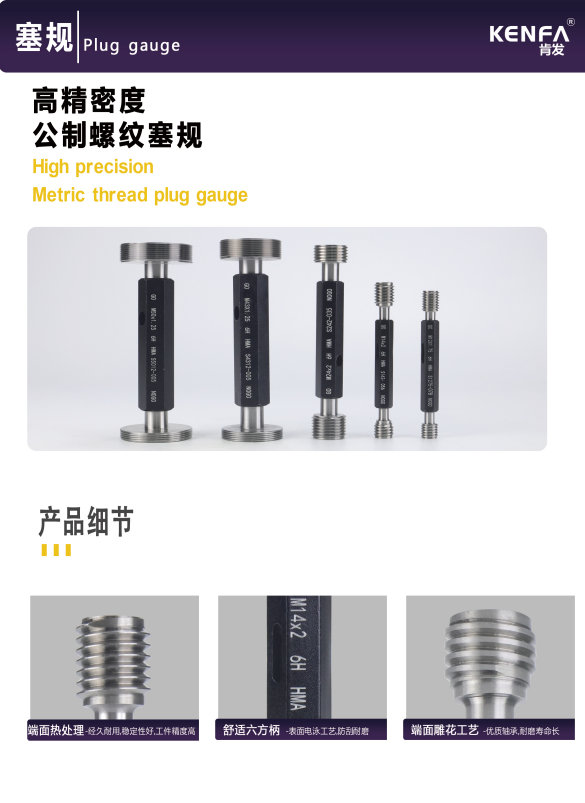
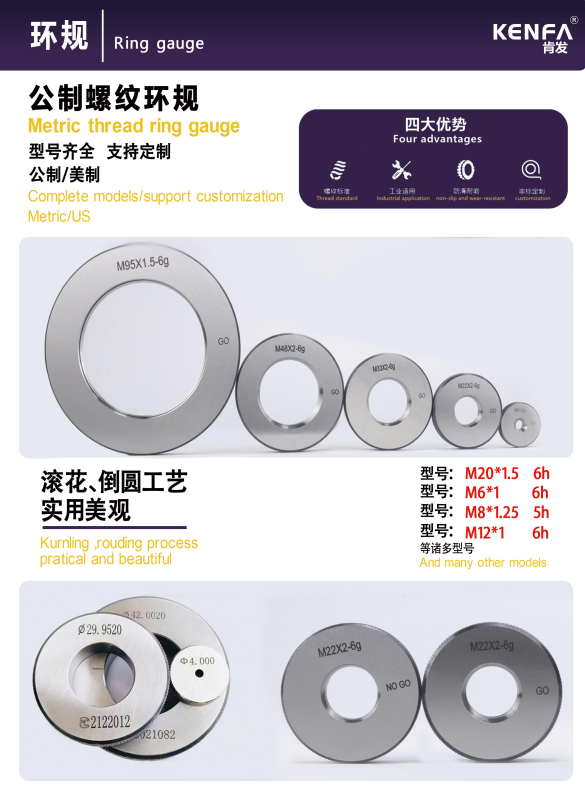
Which claims remain subject to model review?
- Do not repeat high-precision wording as a measurable claim.
- Do not assume a tolerance or accuracy class from nominal size.
- Do not claim calibration or traceability documents unless quoted.
- Do not promise availability or acceptance before exact review.
Which KENFA pages should be reviewed next?
- Plug and Ring Gauges
- Thread Production and Inspection
- Factory and Quality
- Cutting Tool RFQ Preparation Checklist
- How to Prepare a Cutting Tool Compatibility RFQ
How should buyers submit the request?
Use the KENFA RFQ form for Plug and Ring Gauges. Attach only the drawings and photos needed for technical review, copy current model markings exactly and separate required facts from preferred targets. Price, availability and delivery are confirmed only through the final quotation.
Buyer Questions
Which marking details belong in the RFQ?
Copy every visible standard, size, pitch, tolerance and GO or NO-GO marking and attach clear photos.
Can a gauge be selected from nominal size alone?
No. Thread standard, pitch, tolerance class, internal or external feature and inspection purpose must also match.
How should document requirements be handled?
List each required calibration, inspection, marking or traceability document so it can be confirmed before quotation.
Does catalog wording prove an accuracy class?
No. The exact class, acceptance reference and document set must be tied to the quoted gauge.
Source Notes
KENFA catalog assets CI-66 and CI-67; CAT-005 permits family and custom-RFQ use but blocks measurable precision and documentation claims. This guide uses the current KENFA family-depth and RFQ evidence boundaries. Last reviewed July 15, 2026.