A custom forming-tool RFQ should start with a dimensioned finished-feature drawing, workpiece material, tolerances, machine interface, operating direction, current tool or sample, quantity and inspection method. For taps or dies, also provide thread standard, size, pitch and hole or stock condition. KENFA can review the route without assuming profile, material, coating or delivery.
What decision does this guide support?
This guide separates the finished feature from the eventual tool construction and gives buyers a controlled path for standard thread tools and non-standard forming profiles.
What should buyers compare?
| Starting point | Information to confirm | Why it matters |
|---|---|---|
| Produce an internal thread | Standard, size, pitch, blind or through hole, depth, workpiece and machine | Narrows the tap route while keeping construction subject to review. |
| Produce an external thread | Standard, size, pitch, stock diameter, length, hand, workpiece and equipment | Defines the external feature and operating method for a die inquiry. |
| Request a custom profile | Dimensioned drawing, tolerances, workpiece, interface, quantity and inspection method | Controls geometry before feasibility and tool construction are discussed. |
What information should buyers send?
- Dimensioned feature or thread drawing with tolerances.
- Workpiece designation and blank, hole or stock condition.
- Machine, holder, interface and operating direction.
- Current tool code, sample and photos when available.
- Quantity, destination and required inspection method.
How should the KENFA catalog images be used?
The following production Media Library images identify the relevant KENFA family and visible catalog route. They do not prove an exact model, dimension, interface, material, performance, stock or delivery condition.
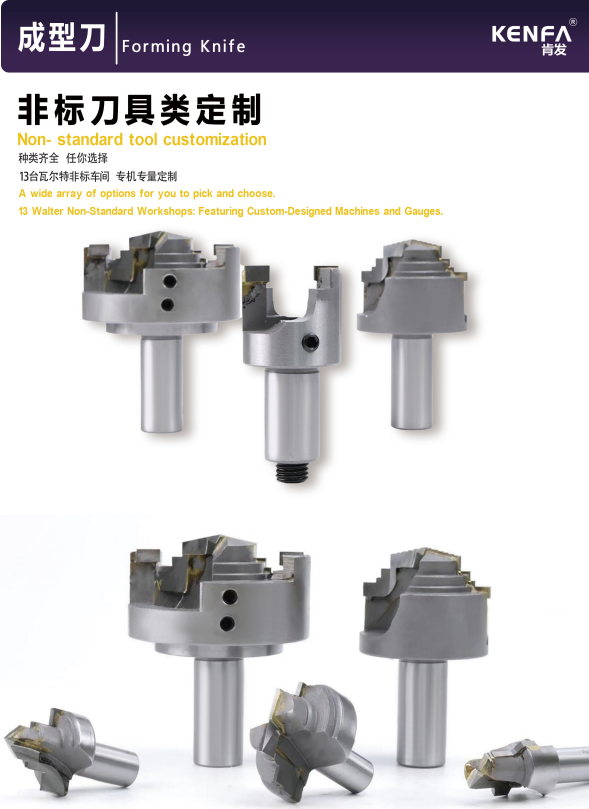
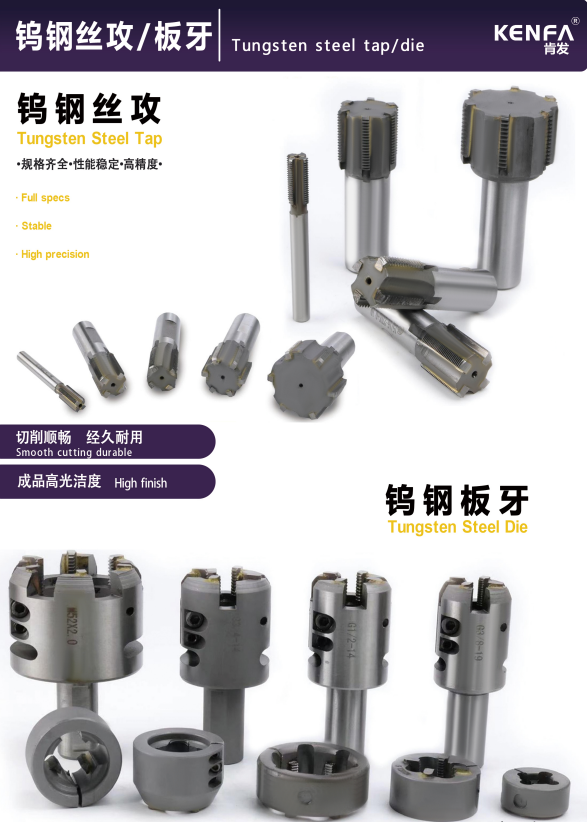
Which claims remain subject to model review?
- Do not infer available profiles from a custom-tool overview.
- Do not infer tool material, coating or heat treatment from appearance.
- Do not treat tungsten-steel wording as a tool-life claim.
- Do not promise feasibility, tolerance, stock or delivery before review.
Which KENFA pages should be reviewed next?
- Forming Taps and Dies
- Thread Production and Inspection
- Punching Tools
- Cutting Tool RFQ Preparation Checklist
- How to Prepare a Cutting Tool Compatibility RFQ
How should buyers submit the request?
Use the KENFA RFQ form for Forming Taps and Dies. Attach only the drawings and photos needed for technical review, copy current model markings exactly and separate required facts from preferred targets. Price, availability and delivery are confirmed only through the final quotation.
Buyer Questions
What is the minimum information for a tap or die RFQ?
Provide the thread standard, size, pitch, material, hole or stock condition, machine, current reference, quantity and drawing.
Why does a blind hole need separate review?
Thread depth, available relief, chip or forming conditions and entry geometry differ from a through-hole application.
How should a non-standard profile be submitted?
Use a dimensioned drawing with tolerances, workpiece, interface, quantity and inspection method rather than a photo alone.
Does an overview image confirm tool construction?
No. Material, coating, heat treatment and geometry remain tied to the reviewed drawing and quoted tool.
Source Notes
KENFA catalog assets CI-68 and CI-69; CAT-005 permits family and custom-RFQ context but no unprinted profile, material or performance claim. This guide uses the current KENFA family-depth and RFQ evidence boundaries. Last reviewed July 15, 2026.